Showing posts with label closing the gender gap. Show all posts

Saturday, October 20, 2018

Our Top Picks for October 20, 2018

If you've been paying attention to the Nobel Prizes in science, you might be wondering why historically 97% of science Nobel Laureates have been men. This year the prize announcements generated buzz because women won prizes in two of the science categories: Frances Arnold won in Chemistry for her work on directed evolution, and Donna Strickland won in Physics for her work on lasers. Sadly, two women Nobel Laureates in one year (out of up to nine scientists who can be awarded Nobel Prizes -- three for each category) is still considered a lot of women for one year. So why don't more women win Nobel Prizes? In this article, Mary K. Feeney, Associate Director of the Center for Science, Technology and Environmental Policy Studies at Arizona State University, argues that it's a combination of structural barriers in academic STEM careers and implicit bias about who does science that make it harder for women to rise to the top in academic STEM fields. In this article, Rowan Thomson, Associate Professor of Physics at Carleton University, suggests how we can act to change these gender disparities that lead to women's under-representation among Nobel Laureates.

A recent analysis published in Nature aims to explain why women are underrepresented in independent fellow positions. Women make up about a quarter of independent fellows in programs including the NIH Early Independence Award, Carnegie Institute Staff Associate program, the Whitehead Fellows program, and the University of California San Francisco Sandler Fellows program. The analysis suggests that this is due both to women being underrepresented in the applicant pool and to bias against women applicants.

If you're like me, asking questions at seminars can feel a bit intimidating! It turns out that this is common among women in science, according to a new study in PLoS One. They find that women ask fewer questions in seminars than men do, and also that women are more likely than men to let internal factors (e.g., not having the nerve) prevent them from asking questions.

The journal Neuropsychopharmacology (NPP) has done some research into gender disparities among its editors, reviewers, and authors. As a result of this work, NPP is taking steps to increase the number of female reviewers and editorial board members.

#MeTooSTEM has launched a GoFundMe to help fight sexual and gender-based harassment and assault in STEM. In their words: "There are no 'baby steps' in ending sexual harassment. We need brave, giant steps. And we need your help to make them. We are asking for your contribution so we can file for 501c non-profit status, hire legal consultants to help protect students and raise awareness. Non profit status will make us eligible for grants, more donations and, most of all, more action."


Thursday, September 13, 2018

Our Top Picks For September 13th 2017

⭃Our culturally ingrained perceptions of STEM individuals indeed play a role in our professional decisions, as we act to reinforce stereotypical roles and maintain homogeneity in working environments. While those of us in STEM would like to presume that we judge each other solely on scientific merit, data suggest that we reflect our unconscious biases around gender and race in our assessments of ourselves and others. This Neuron article, "Advancing Science: How Bias Holds Us Back," talks about how bias in STEM fields is creating a less diverse environment, and how that can affect the quality of science, and its discoveries. 


Flickr Image form Queen's University. 


⭃"Taking a confident leap into uncertainty," is Melina Schuh's own account of her progression through the ranks of scientist to group leader at the Medical Research Council Laboratory at Cambridge, and on to Director at the Max Planck Institute for Biophysical Chemistry in Germany. She talks about how she decided to apply for the positions that she did, and how she knew that starting a family wasn't something she could put off while trying to wait for the elusive perfect time. 


Flickr Image from Hagerstown Community College. 


⭃"What fewer women in STEM means for their mental health," says, "the reality is that STEM professions are most commonly male and it remains surprising when these professional roles are held by women. The large gender imbalance means that women may naturally feel they’re outsiders at school and at work. This situation is often uncomfortable and mentally demanding, when even just showing up and doing your job comes with constant social stresses and anxiety. Ironically, the difficulties that they (we) encounter often dissuade the next generation of women from joining us. It’s a self-reinforcing cycle that we need to break."


Working conditions in academic labs encourage abusive supervision. It is time to improve monitoring of and penalties for abuse, says Sherry Moss. Check out this Nature article, "Research is set up for bullies to thrive."


Flickr Image from Hagerstown Community College. 


The article, "Gender and international diversity improves equity in peer review," hooks you in immediately with the opening of their abstract, which reads: "The robustness of scholarly peer review has been challenged by evidence of disparities in publication outcomes based on author's gender and nationality. To address this, we examine the peer review outcomes of 23,873 initial submissions and 7,192 full submissions that were submitted to the biosciences journal eLife between 2012 and 2017. Women and authors from nations outside of North America and Europe were underrepresented both as gatekeepers (editors and peer reviewers) and last authors. We found a homophilic interaction between the demographics of the gatekeepers and authors in determining the outcome of peer review; that is, gatekeepers favor manuscripts from authors of the same gender and from the same country."


Gender discrimination in the workplace remains rife, with many young women experiencing sexual harassment, job insecurity and low pay compared with male peers, a survey has found. Almost a quarter (23%) of females aged between 16 and 30 have been sexually harassed at work but only 8% have reported it, according to the poll for the Young Women’s Trust. See the troubles women in England, Wales, and all over the the Guardian's post, "Workplace gender discrimination remains rife, survey finds" and how people are reacting to this information. A Government Equalities Office spokesman said: “This government is committed to tackling burning injustices, including closing the gender pay gap and sexual harassment in the workplace."

Check out this event: 
In the past year, the worlds of medicine and science have been part of a broad reckoning about the obstacles that can block women from advancing and feeling comfortable in the workplace. Universities, hospitals, and life sciences companies are launching and expanding gender diversity initiatives, but what’s really moving the needle?
As part of Boston’s Hubweek, STAT’s Rebecca Robbins will lead a conversation about what’s changing — and what’s not — in laboratories, executive suites, and boardrooms. Coffee and snacks will be provided. Register below to reserve a seat.
Location
The Broad Institute
415 Main Street
Cambridge, MA 02142
Date & TimeTuesday, October 9th
10:00 a.m. – 11:15 a.m.
Doors open at 9:30 a.m.
Register here

Monday, July 2, 2018

Our Top Picks For July 2nd, 2018

Flickr image by Laura Dahl. 

The idea that men and women's differences stem from innate biological and anatomical differences has been a subject of debate for many years. It has already been proven that many gender differences are actually started and perpetuated by society's own predetermined gender roles; but how much of this would naturally be present regardless? This Atlantic article by Taylor Lorenz discusses leading neuroscientist's findings and beliefs on the matter.


Flickr image by Rachel. 

We have read and heard many stats on the gender gap in STEM fields; both in regards to who the actual researchers doing science are, to the authors who are being published, but how do these two sectors of science compare to one another? For example, about 30% of grants and funding go to women in science both in the US and Europe, but in The Conversation's article, "Perish not Publish," Dr.'s Fine and Shen discuss that while they would have also expected about 30% of last authors in Science and Nature to be women, it was actually only 15%. Check out the article's analysis of the where journals and other publication pathways might be going wrong.


Attaining gender equality does not automatically fix the racial inequality seen in STEM fields. This Eureka Street article by Laura La Rosa discusses how the feminist movement has always included women from all walks of life, and how some feminist leaders fail to remember that.


Ed Yong, a writer for The Atlantic, wrote an article entitled "I Spent Two Years Trying to Fix the Gender Imbalance in My Stories," where he looks back at his own articles, and the sources he spoke too, and saw a huge imbalance of quotes from men compared to women. In this article, he shares some tips that he's learned through the years to help society's bias not be perpetuated through outlets such as science communication.

Flickr image from International Institute of Tropical Agriculture. 

In collaboration with Sian Culley at University College London, this resource has been created to showcase and highlight female microscopists around the world and the specific areas of microscopy they specialize in to assist scientific and conference organizers in selecting excellent speakers for microscopy events and maintaining a positive gender balance.


Check out some stats on Women in Neuroscience base on Neuroscience 2017 registrants here.

Find 10 recent job posts here:
https://jobflash.informz.net/informzdataservice/onlineversion/ind/bWFpbGluZ2luc3RhbmNlaWQ9MjM3MTY5MCZzdWJzY3JpYmVyaWQ9MzYxODMzMTEx

Check out this postdoc opening at Duke, info available on the Slack group PWN page. HARP Postdoc Ad and Job Description_2018-0607.pdf

Thursday, June 21, 2018

Our Top Picks From June 21st, 2018


PWN's own founders, Dr. Ghazaleh Sadri-Vakili and Dr. Courtney Miller, are two of the many talented speakers featured in this video from Society for Neuroscience meeting in 2017 on "Addressing Issues Facing Women in the Early Stages of their Scientific Career."

Thank you to Jacqueline McGinty for pointing out the NASEM Webinar happening June 26th, as well as sharing this Harvard Business Review article, highlighting reasons that might be holding women back from taking leadership roles in STEM fields.

NASEM Releases Report on Sexual Harassment in Science, Engineering, and Medicine
The National Academies of Science, Engineering, and Medicine (NASEM) June 12 released itsreport, “Sexual Harassment of Women: Climate, Culture, and Consequences in Academic Sciences, Engineering, and Medicine.” The committee recommends that a key area of focus to reduce and prevent sexual harassment (including the most prevalent type, gender harassment) is to create a culture and climate that does not allow such behavior, giving six key recommendations for institutions. To assist institutions, faculty, and students in these efforts, the NASEM report website provides several resources. NASEM is hosting a discussion and responses to the report on June 26 in Irvine, CA, which can also be attended by webcast. Following the report release, Darrell G. Kirch, MD, AAMC President and CEO, issued astatement. Read more at AAMC Washington Highlights. 

Flickr Image from Simon Bleasdale.


In the Personnel Today article by Jo Faragher, a discussion on the woman who coined the term "Glass Ceiling," Marilyn Loden. She introduced this phrase 40 years ago in 1978, but even in that amount of time, she doesn't think things have improved much. On International women's day, she comments on the sad reality that most people can-and do-rationalize women being paid 80% of what a man gets paid and that while some industries appear to be breaking tiny holes through the glass ceiling, other industries have only reinforced it.


Gender-bias research doesn't sell, according to Dr.'s Formanowicz, Cislak, and Saguy in their paper "Bias against research on gender bias." This blog post sums up the fact that while there are many types of bias that happens throughout STEM fields (race and gender bias being the most prevalent) only research done on race bias makes it to the most prestigious journals. There are many reasons why this may be, including people thinking 'women are exaggerating the issue,' or the thought that "there are more 'inter-gender collaborations' than 'inter-racial' therefore the gender issue may not even exist." How does that type of thinking impact the advancement of gender equality, and what can we do to help rectify the situation?


Flickr Image from UN Women Gallery. 


Where did we come from, how are we getting there, and how do we keep going? In Fiona M. Watt's Nature Reviews article (More) Women in Science, she talks about how things have changed from her 2006 opinion articles, as well as how the women in professional settings have gained their success.

Check out the paper "Researchers preferentially collaborate with same-gendered colleagues across the life sciences."
Abstract excerpt: "Here, we test whether researchers preferentially collaborate with same-gendered colleagues, using more stringent methods and a larger dataset than in past work. Our results reaffirm that researchers preferentially co-publish with colleagues of the same gender, and show that this 'gender homophily' is slightly stronger today than it was 10 years ago. Contrary to our expectations, we found no evidence that homophily is driven mostly by senior academics, and no evidence that homophily is stronger in fields where women are in the minority. Interestingly, journals with a high impact factor for their discipline tended to have comparatively low homophily, as predicted if mixed-gender teams produce better research."

Related to the article above, this piece, "Opinion: Gender Diversity leads to better science" highlights the reasons why data actually suggests there is "gender-diversity dividend in science." 


Check out these research job listings: 

https://jobflash.informz.net/informzdataservice/onlineversion/ind/bWFpbGluZ2luc3RhbmNlaWQ9MjM3MTY5MCZzdWJzY3JpYmVyaWQ9MzYxODMzMTEx


Wednesday, June 13, 2018

Our top picks from June 13th, 2018


In competitive fields, it can be hard to know where to begin to get a foot in the door if you are uncertain how you will be received, and even harder if some privileges weren't provided to you based on gender, race, or parental income status. This Science News article celebrates and provides a starting point for students who may have been under-served to get into science and be a competitive candidate now and in the future. 


This week, the National Academies of Science, Engineering, and Medicine came out with a report highlighting the sexual harassment that women can be even more susceptible to in the male-dominated STEM fields. This video sums up the report, mentioning that incidents of sexual harassment can be dramatically lowered by taking just a few easy precautionary steps, including encouraging diversity, and changing the model of the mentor-mentee relationships so that there is not so much dependence on a mentor for a student (possibly by encouraging mentor networks and independent funding opportunities for students).

Steps in the right direction are being made at a Harvard Medical School training hospital. As their core values align more with diversity and helping represent under-represented minorities in medicine, they have decided to take down the portraits of "medical luminaries" that hand in an auditorium. Of the 31 gold-framed portraits, 30 are white males. Read more about how this hospital is trying to make more than just a visual change in the article, "In an about-face, hospital will disperse portraits of past white male luminaries, put the focus on diversity."

Flickr Image by Elaine Smith. 

While the Keto diet (a revamped version of the Adkins diet) might be the fad right now, the idea of staying off carbs might be particularly good for women. This article highlights a study done that found that food such as fish and legumes might help women delay the onset of natural menopause, while consuming refined carbs, like pasta and rice, may actually speed it up!


Stock image: Credit © JPC-PROD/Fotolia

For hard science, where you stand on controversial topics like abortion and birth control doesn't change the outcome of the data. Check out these articles on some of the statistics and facts surrounding studies being done on both.


Wednesday, June 6, 2018

Our top picks for June 6th, 2018

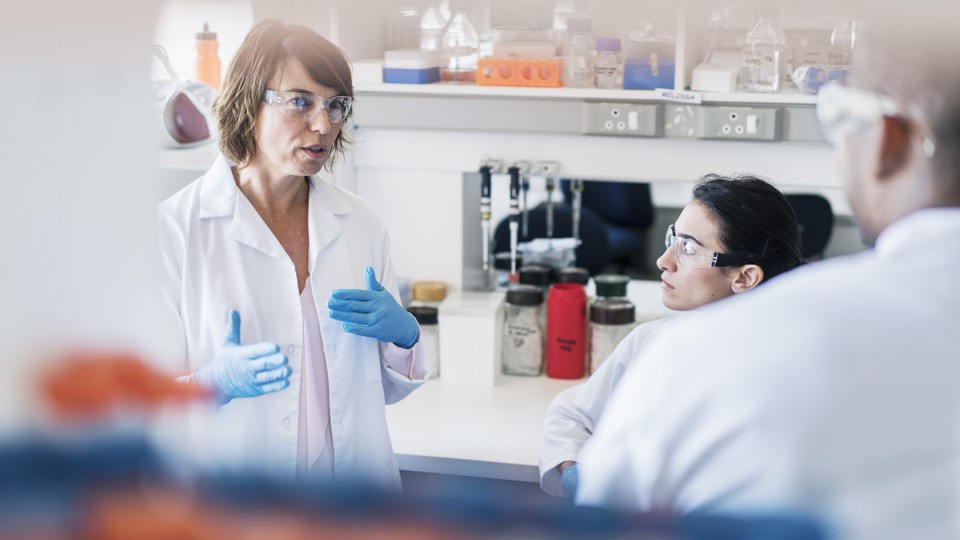
A woman wearing a lab coat, lab goggles, and plastic gloves, speaks and gestures.

There is a lot of speculation on how and when we will be able to close the gender gap, but based on the trajectory STEM fields are on now the data shows that 16 years is the estimated time for the number of publishing female academic authors to equal that of their male counterparts. But even 16 years for some fields is a gross underestimate. Read more in The Atlantic's article "When Will the Gender Gap in Science Disappear."


Flickr image from Womensphere Community. 


Women are just like everyone else, we get by with a little help from our friends! Discov-her has put together a list of 7 organizations that encourage and empower women to continue producing relevant, hard-hitting scientific advancements.


Flickr image from Betsy Weber. 


Fighting the stereotypical damsel-in-distress saved by the knight-in-shining-armor bit, the article "Mentoring Women is not About Trying to Rescue Them," addresses the correct mentor-mentee relationship and attitude that should be present in academia. This "reciprocal mentoring" challegnes the unidirectional mentoring model, benefiting not only women in science but male mentees too and could be one of the most helpful things to bring to light for academic mentors.